Cut Throat Bill
The ThicketCut Throat Bill is the central outlaw pursued after the Sabine River ferry disaster, the bank robbery, and the kidnapping of Lula Parker. His decisive significance lies in the gap between the legend attached to his name and the bodily, calculating criminal revealed by the pursuit: newspapers and dime novels turn him into a notorious figure, while his methods show a man who survives by reading situations, manipulating attention, and abandoning any claim to heroism. His death, struck from a great distance by Shorty, finally collapses the legend into a motionless body and a fallen horse.
Identity and Reputation
Cut Throat Bill is identified as one of the three men responsible for the bank robbery, the sheriff’s murder, and the attack that left Jack Parker’s grandfather dead and Jack himself wounded. Jack names him alongside Nigger Pete and Fatty Worth, describing the group as the men who escaped after the ferry was hit by a water twister and who took Lula Parker with them. The identification turns Jack’s private grief into a law-enforcement case, but the local deputy’s response also shows how widely Bill’s name already circulates: he is not an unknown fugitive but a recognized desperado with a price on his head.
The reputation has several competing sources. A local account says that Bill rode with Frank and Jesse James as a young man and has spent nearly thirty years, intermittently, robbing banks and committing other mischief. Newspaper reports have made him famous, while dime novels recast him as a hero. The contrast is crucial. The sensational literature supplies romance, but the people who have to live with the consequences insist that there are no heroes in the world Bill occupies. His name therefore functions less as a stable description than as a public label assembled from crime reports, popular fiction, fear, and reward money.
Methods and Tactical Intelligence
Shorty’s assessment of Bill is more precise than the legends surrounding him. Bill is said to like cutting throats, yet his chief demonstrated quality is cleverness: he has remained free for years because he is not overly foolish. He understands the angles of a situation and knows how to make pursuit difficult, especially for a tracker such as Eustace Cox. The danger he represents is consequently not limited to direct gun violence. He turns the responses of other people into instruments of escape.
The clearest example is a Missouri shootout in which Bill shot several children in the legs rather than killing them. The wounds drew the town’s attention toward rescue, medical care, and immediate outrage; by the time anyone could organize a pursuit, Bill and his gang were gone. The act is both brutal and strategically controlled. It shows a criminal willing to injure innocents, but also one who calculates how communities distribute attention under pressure. His violence is designed to produce delay, confusion, and moral distraction.
The gang’s movement through the region likewise keeps Bill partly out of view. Reports describe a man called Cut Throat traveling with ten or twelve others, and uncertainty persists over whether every sighting is really him. Even when people believe he is in the woods, the report is hedged by rumor and secondhand testimony. That uncertainty protects him as effectively as distance or cover: the name can be recognized before the man can be located.
Violence, Labels, and Social Order
Bill’s public identity is shaped by a society that sorts people into quickly punishable categories. He is called a desperado, a thief, and a killer before the pursuit has fully reconstructed the facts. The same social world uses racial slurs for Nigger Pete and Eustace Cox and treats Fatty Worth as a grotesque type, so Bill’s notoriety belongs to a broader economy of naming in which newspapers, gossip, reward notices, and crowds compress complex lives into usable labels.
Yet Bill’s label is not merely imposed from outside; his conduct continually feeds it. He participates in the robbery and killing that set the pursuit in motion, takes Lula captive, and travels with armed men. The novel therefore refuses the easy reversal in which the outlaw is only a victim of reputation. His dime-novel image may falsely ennoble him, but the concrete record preserves a pattern of coercion and calculated harm. The tension between “hero” and criminal does not redeem him; it exposes how popular culture can aestheticize violence without erasing its victims.
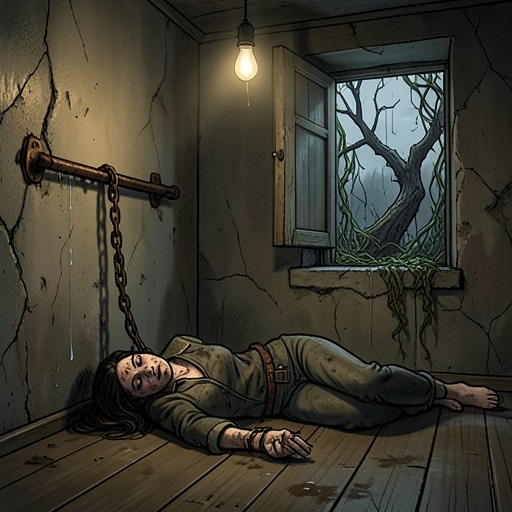
His association with Lula is especially consequential because her captivity makes the outlaw legend intimate. Bill is not simply a distant name in a newspaper. He becomes the man whose gang carries away Jack’s sister and whose presence determines the choices of those trying to rescue her. The pursuit thus links public notoriety to private injury: the larger the legend grows, the more urgently the family must penetrate the confusion it creates.
Pursuit and Final Confrontation
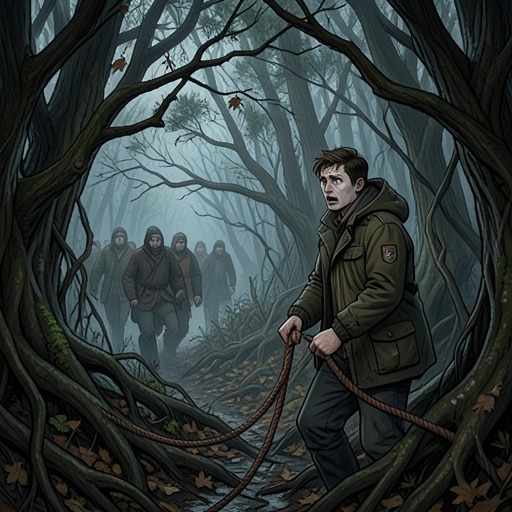
Bill’s final appearance is defined by speed, distance, and sudden stillness. As he and Lula move toward the woods, they become only two dustlike specks against a green line. Once they reach the trees, concealment will make a shot nearly impossible. Shorty therefore does not wait for a closer encounter. He tests the wind with a wet finger, orders silence, and settles the Sharps stock against his shoulder.
The shot is preceded by an extended act of discipline. Shorty exhales, draws another breath slowly, cocks the hammer, clears his throat, and raises the rifle until the weapon seems aimed at the sky rather than directly at the riders. The delay magnifies the uncertainty of the moment. Then the bullet travels across the distance and finds its target: Bill appears to throw up his hands, his horse’s feet collapse, and both rider and horse fall without moving. Lula, freed from Bill’s grip on her horse’s reins, rides on without stopping.
The manner of death is a precise reversal of Bill’s established method. The outlaw has survived by controlling attention, distance, and movement, but the final shot converts distance into judgment. There is no prolonged duel and no heroic last stand. The man celebrated in dime novels is reduced to a target selected through wind, timing, and a rifle’s reach. Shorty’s bitter remark about Billy Dixon underscores the feat while also resisting the mythology that might otherwise turn the killing into another piece of frontier legend.
Narrative Role and Significance
Cut Throat Bill operates simultaneously as character, rumor, and organizing absence. For much of the pursuit, others describe him before the narrative allows him to act in view. His history arrives through newspapers, novels, local knowledge, and frightened speculation; this delayed construction makes his reputation part of the plot’s machinery. Every report changes the perceived stakes, while every uncertainty preserves the possibility that the famous outlaw is somewhere else.
He also gives the novel a test case for the difference between story and plot. The story is the pursuit of a gang after a robbery, murder, kidnapping, and escape. The plot withholds Bill, distributes his identity across conflicting accounts, and makes his tactical intelligence legible through anecdotes before his final appearance. When he is finally killed, the mystery of his location ends, but the contradiction surrounding his name remains: a man can be famous as a hero in cheap fiction and known in lived experience through injured children, stolen money, murder, and captivity. His ending does not settle that contradiction so much as expose the violence required to sustain the legend.